
A standard full bathroom refit takes 10 to 15 working days on site, which is roughly two to three weeks including weekends. A like-for-like swap with no layout change can be done in five to seven days. Move the toilet, change the layout or take on an old property with poor pipework, and you are looking at three to six weeks.
Those are working times, not calendar times. The part people underestimate is what happens before anyone turns up: design, ordering and lead times routinely add two to four weeks before the first day on site.
Here is the day-by-day breakdown, what actually slows a bathroom down, and how long you will be without a working shower.
Table of Contents
Bathroom Renovation Timelines at a Glance
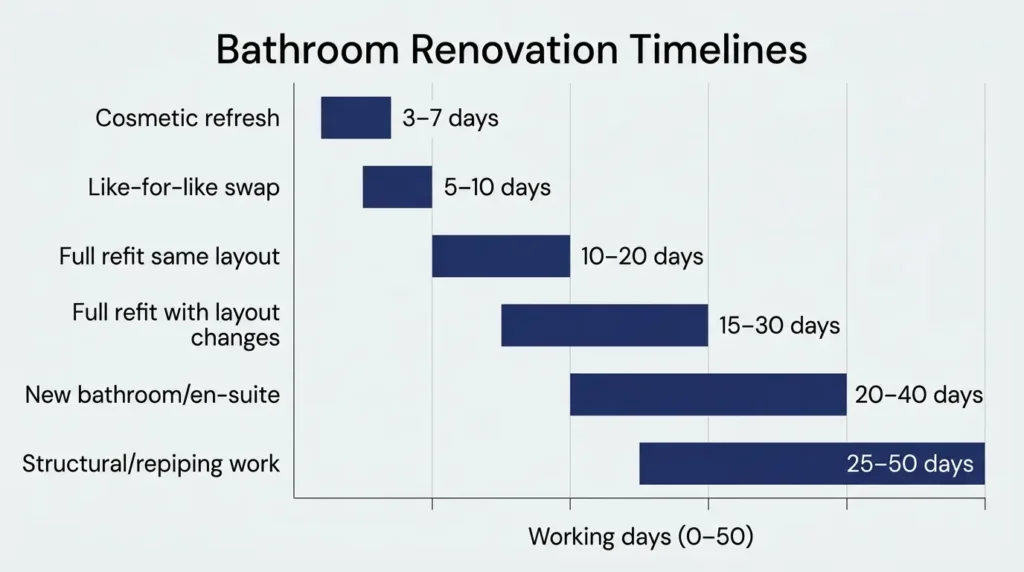
| Type of job | Time on site |
| Cosmetic refresh: retile, repaint, new taps | 3 to 5 days |
| Like-for-like swap, same layout | 5 to 7 days |
| Full refit, same layout, full retile | 10 to 15 days |
| Full refit with layout changes | 3 to 5 weeks |
| New bathroom or en-suite in a room that was not one | 4 to 6 weeks |
| Structural work, or an old property needing repiping | 5 to 7 weeks |
Add design and ordering on top. A bathroom booked today with everything in stock might start in two weeks. One with a made-to-measure shower screen or specialist tiles might start in six.
Day by Day: A Standard Bathroom Refit
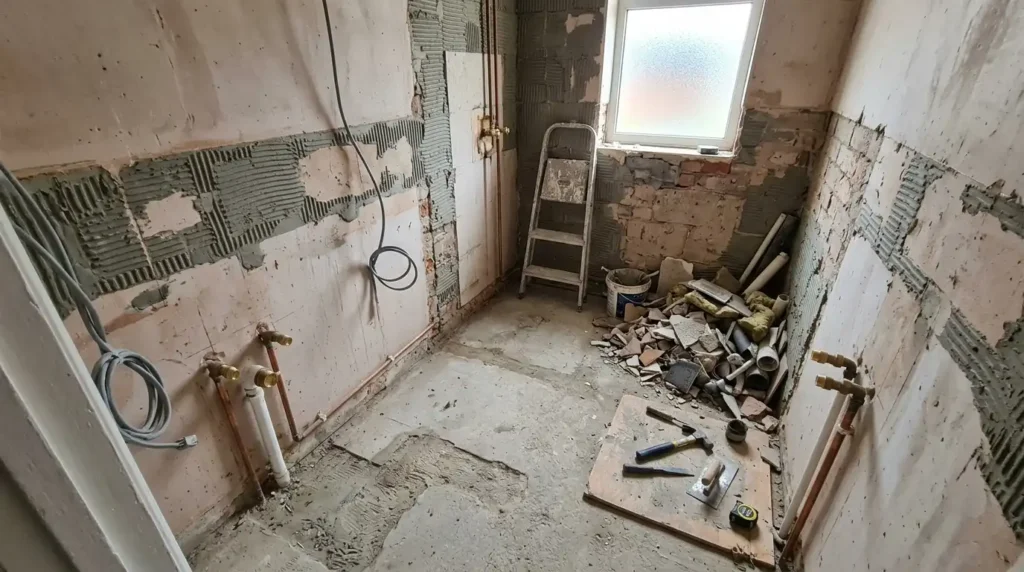
This is a same-layout full refit in an average three-piece bathroom, roughly 2m by 2.5m, with a single fitter and a tiler.
Day 1: Strip out. Old suite, tiles, flooring and any damaged plasterboard come out. Waste goes into a skip or van. By the end of day one the room is bare, and this is when the surprises appear.
Days 2 to 3: First fix plumbing. Hot, cold and waste pipes are moved or renewed to suit the new suite positions. Shower valve and bath filler pipework is set into the wall. Anything hidden behind the old suite gets dealt with now.
Day 3 or 4: Electrics. Lighting, shaver socket, extractor fan and any towel rail or underfloor heating supply. Cables are run and terminated, but nothing is finished off yet. In older properties this is often where a full rewire of the bathroom circuit turns out to be sensible rather than optional.
Days 4 to 5: Boarding, levelling and waterproofing. Walls are boarded, usually with moisture-resistant board or tile backer board. Floors are levelled. Wet areas around the shower and bath are tanked with a waterproof membrane, applied in coats with 12 to 24 hours between them.
Days 6 to 9: Tiling. Walls first, then floor, or the other way round depending on the design. Adhesive needs to cure before grouting, usually overnight. Grouting takes most of a day, and grout needs to cure before the room gets wet.
Days 10 to 12: Second fix. Bath, shower, WC and basin fitted and connected. Taps, shower screen, towel rail, light fittings, extractor fan and shaver socket all go on. Electrical testing and certification happens here.
Day 12 or 13: Sealing and finishing. Silicone around bath, shower tray, basin and worktop. Skirting, door furniture, painting the ceiling and any non-tiled walls. Silicone needs 24 hours before it gets wet.
Day 13 to 15: Snagging and handover. Adjusting doors and screens, checking falls and drainage, cleaning down, fixing the small things. There is almost always a short return visit a week or two later.
Why the Waiting Days Are Not Wasted Days
A common complaint is that the bathroom sat untouched for a day and nothing happened. Usually something was happening, it just was not visible.
Bathrooms are full of materials that have to cure before the next stage can start:
- Waterproof membranes need 12 to 24 hours between coats
- Self-levelling floor compound needs 12 to 48 hours depending on depth
- Tile adhesive needs to set before grouting, typically overnight
- Grout needs to cure before the shower is used, usually 24 hours minimum
- Silicone needs 24 hours before it gets wet
Rushing any of these is how you get lifting tiles, failed seals and water tracking into the floor below. A fitter who tells you the room needs a day to dry is protecting your bathroom, not padding the job.
What Makes a Bathroom Take Longer
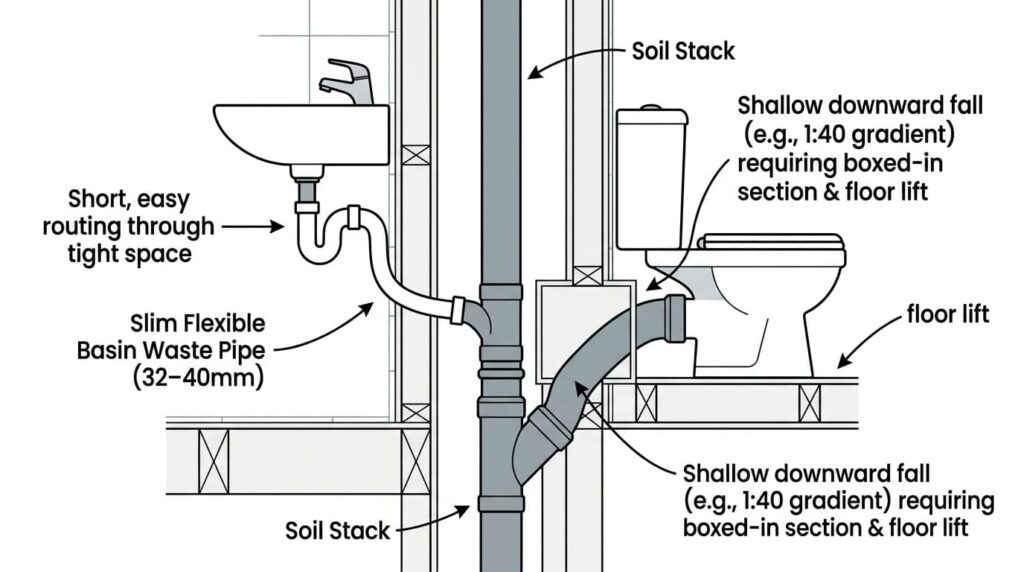
Moving the toilet
This is the single biggest timeline changer. Basins and baths can be moved with reasonable freedom because their waste pipes are narrow and flexible. A WC needs a 110mm soil pipe running at the correct fall to the stack, and that often means lifting floors, boxing new runs, or coring an external wall.
Moving the toilet turns a two-week job into a three or four-week one more often than not.
Old properties
Anything Victorian or pre-war brings its own list: lead or steel pipework that cannot be reused, no isolation valves anywhere, uneven walls that need floating out before tiling, and joists that have been notched by previous trades. Our guide to replacing plumbing in an old house covers what typically gets found.
Budget an extra three to ten days on a period property, and expect the strip-out day to change the plan.
Tile choice
Not all tiles take the same time to fit. Large-format porcelain needs a perfectly flat substrate and often extra wall preparation. Mosaic and patterned tiles take two to three times as long per square metre. Natural stone needs sealing before and after grouting.

Choosing tiles is a design decision with a schedule attached. Our guides to tile materials for bathrooms and tiling ideas for small bathrooms are worth reading before you commit, and wall panelling is genuinely faster than tiling if speed matters more than finish.
Lead times
The most common cause of a delayed bathroom has nothing to do with the fitter. Made-to-measure shower screens, imported tiles, stone worktops and specialist sanitaryware all carry lead times of two to six weeks.
Everything should be on site before day one. A fitter who starts with items still on order is planning a gap in the middle of your job.
Hidden damage
Rot in the floor under a leaking shower tray, damp behind tiles, a soil pipe that has been leaking into a void for years. None of it is visible until the room is stripped, and all of it adds three to ten days.
One bathroom in the house
Not a technical delay, but a real one. Where the property has a single bathroom, sensible fitters phase the work so the WC stays connected as long as possible and gets reconnected first. That phasing adds a day or two and is worth every hour of it.
How Long Will You Be Without a Bathroom?
For a full refit with one bathroom in the house, expect no usable shower for the whole 10 to 15 days, and no WC for around three to five days in the middle of the job.
A reasonable fitter will:
- Leave the existing WC connected through strip-out and first fix where the layout allows
- Reconnect a WC as soon as second fix begins, ahead of everything else
- Tell you at the start exactly which days you will have nothing
Ask for that specifically when you book. It is the difference between an inconvenient fortnight and an unmanageable one.
The shower is the last thing to come back. Grout and silicone both need a full day of curing before water touches them, so even after the shower is physically installed there is usually a 24 to 48 hour wait before you can use it.
Plan the Calendar Backwards
The site work is the shortest part of a bathroom project. Working backwards from the day you want it finished:
Weeks 1 to 2: Design and specification. Layout decided, suite chosen, tiles chosen, electrical positions marked. Every decision made now is one that cannot delay you later.
Weeks 2 to 6: Ordering and lead times. Order everything at once and have it delivered before the start date. Check the shower screen and tiles specifically, since those are the two items that hold jobs up.
Week 1 of works: Strip out and first fix.
Week 2: Boarding, waterproofing, tiling.
Week 3: Second fix, sealing, snagging.
Most bathroom projects that overrun did not overrun on site. They started before the materials were ready.
Does Bathroom Size Change the Timeline?
Less than people expect. A small bathroom has fewer square metres of tiling, but the same number of stages, the same curing times and the same number of connections.
A cloakroom WC might come in at three to four days. A standard three-piece bathroom is 10 to 15. A large family bathroom with a separate shower enclosure, double basin and underfloor heating might run to 15 to 20, mostly because there is more tiling and more to connect rather than because the room is bigger.
If you are working on a compact space, our guide to renovating a small bathroom covers where the money and the time actually go. For costs across all sizes, see our bathroom renovation cost guide.
What a Realistic Quote Should Tell You
A quote that says “approximately two weeks” is not a programme. Before you agree a start date, you should have in writing:
- The start date and the expected finish date
- Which days the WC will be out of use
- Whether all materials are on site before day one
- Who is doing the electrics and how the work will be certified
- What happens to the programme if something is found during strip-out
- When the snagging visit will happen
Contractors who work to that level of detail tend to finish when they said they would. Our bathroom fitting service in Nottingham works to a written day-by-day programme for exactly that reason, and the same principle applies to any trade you hire.
If the bathroom is part of a larger project, the sequencing changes again, and our complete home renovation guide covers where bathrooms sit in a whole-house programme.
Planning a Bathroom Renovation in Nottingham?
Buon Construction fits bathrooms across Nottingham, from single-room refits to bathrooms forming part of a wider renovation. If you want a written day-by-day programme before committing to a start date, get in touch and we will put one together.
Frequently Asked Questions
Do I need building regulations approval for a bathroom renovation?
Not for a like-for-like replacement, new tiles, flooring or decoration. You do need approval for a new bathroom in a room that was not one, new or moved drainage, structural alterations, a new electrical circuit or electric shower, and new ventilation. Bathrooms need mechanical extraction, usually rated at 15 litres per second.
Do I need one bathroom fitter or separate trades?
Most bathroom fitters handle plumbing, tiling and installation, and subcontract the electrics to a Part P registered electrician. A single point of responsibility is faster, because one person sequences the trades. Hiring separately means you carry the coordination, and a missed handover between two trades can cost a week.
How far in advance should I book a bathroom fitter?
Four to eight weeks for a good independent fitter, longer through spring and summer. Book the fitter first, then order materials to land before the agreed start date. Booking materials before the fitter is how people end up with a boxed bathroom suite in the hallway for a month.
How long does a wet room take compared with a standard bathroom?
Longer, typically 15 to 20 working days. A wet room needs the floor formed to falls, a fully tanked floor and wall system, and often a recessed former set into the joists. The extra waterproofing stages and their curing times are what add the days, not the fitting itself.
Do I need to be at home while the work is done?
No, and most fitters prefer you are not. What matters is being reachable and available at three points: the end of strip-out, when anything unexpected gets found, before first fix is closed up, when socket and fitting positions are confirmed, and at handover for snagging.
Can you renovate a bathroom in a weekend?
Only if the job is cosmetic: paint, a new mirror, new taps, new accessories. A full refit cannot be done in a weekend at any price, because tanking, adhesive, grout and silicone all need curing time that no amount of labour shortens. Anyone promising a two-day full bathroom is skipping a stage you will pay for later.
