
If you want your small bathroom to look brighter, bigger, and more stylish without changing the layout, the quickest way is to choose the right tiles. The best bathroom tiling ideas for small bathrooms use size, colour, texture and layout to create space even when you don’t actually have it. After trying many designs myself and comparing what works in typical UK homes, I’ve learned that tile choice completely changes how a compact bathroom feels. Here is everything you need to know before starting.
Table of Contents
Why Tiles Matter So Much in a Small Bathroom
Tiles reflect light, set the tone of the room and guide how your eyes move. In the UK, where bathrooms are usually smaller and often squeezed into awkward corners, the patterns and finishes you pick can make a tiny room feel open instead of cramped. This is why tile size, grout colour and layout matter as much as the design itself.
1. Use Large Tiles to Make a Small Bathroom Look Bigger
One of the biggest myths is that small bathrooms need small tiles. It’s actually the opposite. Large tiles reduce grout lines, which creates a cleaner look and makes the walls appear wider. When I upgraded my own bathroom, switching from small mosaics to large porcelain tiles made the space feel almost twice the size. Light grey, soft beige, marble-effect porcelain and stone-look tiles work exceptionally well because they bounce light without feeling too shiny. In older UK homes with low ceilings, large tiles also create long clean lines that make the walls feel taller.
2. Choose Light, Soft Colours for Brighter Space
Colour is one of the strongest tools for opening up a small bathroom. Soft whites, warm greys, pale sage, powder blue and creamy stone shades make the room look calm and airy. In the UK, where natural light is limited, these colours prevent the space from feeling closed in. Glossy tiles reflect more light, while matt tiles offer a modern, smooth finish. I personally prefer matte tiles for walls because they hide water spots better, but a glossy finish behind a sink or shower can brighten dark corners.
3. Try Vertical and Horizontal Patterns to Change the Room Shape
Tile direction changes how your eyes read the room. When I helped a family member renovate their narrow bathroom, placing rectangular tiles horizontally made the walls look wider. In a low-ceilinged bathroom, stacking tiles vertically helps stretch the height. UK homes often have awkward layouts, so choosing the right tile direction can fix visual imbalance without building work. Herringbone, brick-bond and stacked patterns are all good options as long as the spacing is consistent.
4. Make a Statement with a Feature Wall
Small bathrooms benefit from one intense design moment. A feature wall behind the vanity or the shower is a smart way to add character without overwhelming the space. Textured tiles, marble veins, terrazzo speckles or soft patterns create a focal point. I’ve always found that when the feature wall stays within a light colour palette, the room feels modern and not crowded. This idea often appears in UK renovation trends and is used to draw attention away from the room’s compact size.
5. Use Matching Wall and Floor Tiles for a Seamless Look
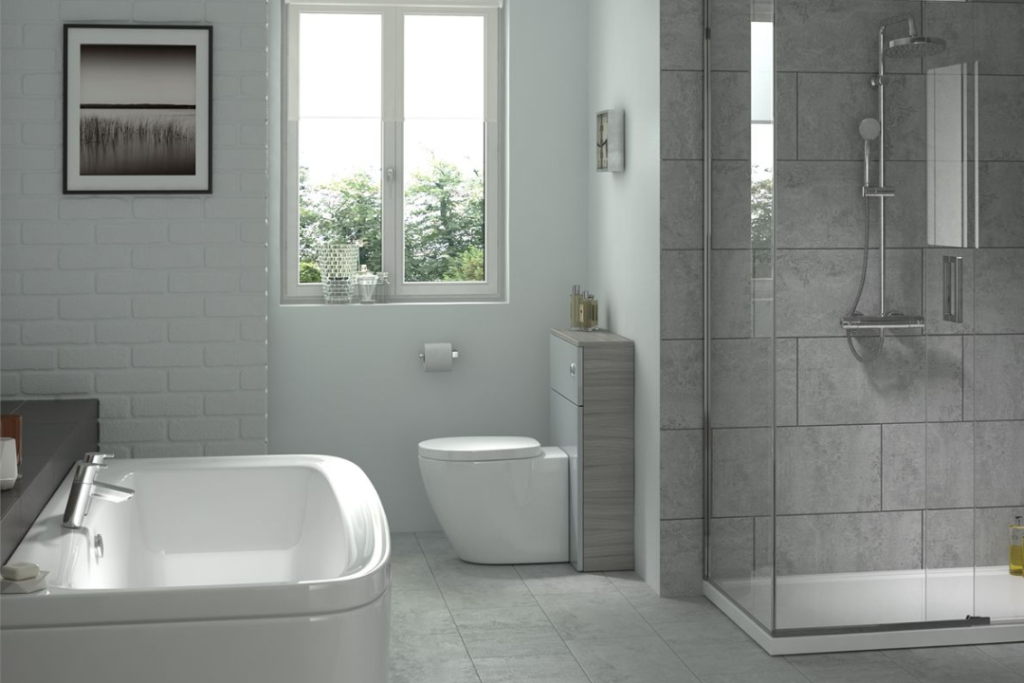
Bathrooms feel unified when the floor and walls are similar in terms of tone and finishes. It shows reduced visual cuts, making a small bathroom feel open and expansive. Additionally, the stone-effect porcelain tiles in beige, warm grey or sand tones are popular in the UK because of their luxurious feel without the maintenance of real stone.
6. Choose Low-Contrast Grout to Keep the Space Clean and Open
Grout colour changes everything. In a small bathroom, dark grout with light tiles creates too many lines, making the room feel busy. Light grey or off-white grout blends with most UK tile styles and keeps the look clean. When I switched to a softer grout in my own renovation, the bathroom looked immediately calmer and more modern.
7. Use Mirror Tiles or Gloss Accents to Boost Light
If your bathroom has no window or limited daylight, reflective or mirror-effect tiles can help brighten the space. You don’t need to tile the whole wall. A small area around the vanity or above the sink makes a big difference. These finishes work well in UK bathrooms because they amplify artificial lighting and give depth to narrow rooms.
8. Add Texture Without Crowding the Space
Textured tiles are trending across the UK, especially soft ribbed tiles, wave patterns and stone-inspired finishes. Texture gives personality without relying on bold colour. Just be careful not to overuse it. One textured feature wall or shower area is enough. Balance it with smooth tiles to keep the room open.
9. Use Mosaic Tiles in the Right Places
Even though large tiles are best for most small bathrooms, mosaic tiles work beautifully in limited spots like a shower niche, behind a tap, or around a curved area. UK designers often add mosaics for character while keeping the rest of the room simple. The key is to use mosaics as an accent, not the main tile.
10. Add Natural-Look Tiles
Use the wood-effect and stone-effect tiles to make your small bathroom feel cosy and give you a spa-like experience with minimum maintenance issues. These designs are trending in the UK because of their warm and modern feel. To create a well-balanced look, pair wood-effect floor tiles with softer white walls, or stone-like tiles with warm neutrals.
11. Think About Practicality
Because of limited ventilation, small bathrooms can get humid quickly. To counter that, Porcelain tiles should be used for their durability, low maintenance, and water resistance. Matt porcelain tiles also provide better slip resistance in wet rooms or walk-in showers. This is why I prefer them for floors, especially if kids or elderly family members use the bathroom.
12. When to Bring in Professionals
DIY methods are possible, but not convenient in small bathrooms because of their tight corners, pipe cutouts, and uneven walls, which make tiling difficult. For this purpose, Buon Construction offers several services, including complete bathroom renovations. Additionally, they will guide you in choosing the tiles, colours, and other technical details. Their professional staff ensures that there are no leaks, uneven tiling or wasted materials.
Tile Ideas and Why They Work in the UK?
| Tile Idea | Best For | Why It Works | UK Tip |
| Large porcelain tiles | Walls and floors | Creates a wide, clean look | Pick soft grey or beige for more brightness |
| Vertical stacked tiles | Low ceilings | Makes the room look taller | Works well in older UK homes |
| Light neutral colours | Any small bathroom | Reflects light and opens space | Ideal for UK bathrooms with no windows |
| Feature wall | Shower or vanity | Adds personality without clutter | Keep patterns soft |
Final Verdict
Want your small bathroom to feel completely different? Well, you can transform your bathroom, and this can happen much faster than you expect. Choose large tiles with lighter colours and simpler layouts because they give a feeling of open space in the tightest bathrooms in the UK. Soft textures, subtle patterns and low-contrast grout help create a calm, modern look without making the room feel busy. Whether you prefer a clean spa style, a cosy stone-inspired finish, or a classic metro tile layout, the key is to keep everything balanced so the space works with you rather than against you.
FAQs
What tiles make a small bathroom look bigger?
Large porcelain tiles in light colours work best because they reduce grout lines and reflect more light.
Should small bathrooms use matt or glossy tiles?
Matt tiles hide marks and offer better slip resistance, while glossy tiles help brighten dark corners.
What is the best tile colour for a tiny bathroom?
Soft whites, warm greys, pale beige, and sage green create an open, calming feel suitable for UK homes.
Can I mix different tile styles in a small bathroom?
Yes, but keep the palette cohesive. Use one main tile and one accent tile to avoid clutter.
Are mosaic tiles suitable for small bathrooms?
They work well as accents in niches or splashbacks, but can make the whole room look busy if used everywhere.
Should grout match tiles in a small bathroom?
Yes, low-contrast grout makes the space look smoother and larger.
Do I need professional tilers for a small bathroom?
Hiring specialists like Buon Construction is wise because small rooms require precise cutting and proper waterproofing.

One Response