
The best fence paint for most UK properties is Ronseal Fence Life Plus for general garden fences and Cuprinol Ducksback for sheds, panels, and rough sawn timber that needs deep weatherproofing. Both offer water-resistant, fungal-protective coverage suited to British weather, with five-year-plus protection when applied to clean, dry timber.
That said, the right choice depends on your fence type, the finish you want, and how often you are willing to repaint. In this guide, the team at Buon Construction breaks down the top fence paints available in the UK, what to look for, and how to get a finish that genuinely lasts through wet winters and hot summer spells.
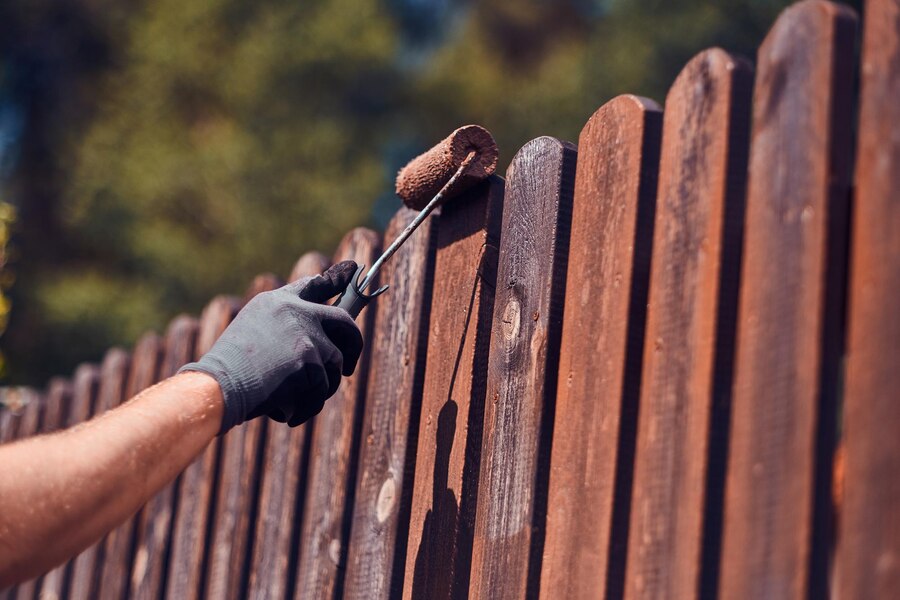
Quick Comparison: Best Fence Paints in the UK
| Product | Best For | Coverage | Finish | Lifespan |
| Ronseal Fence Life Plus | All-round garden fences | 5 m²/L | Matt opaque | 5 years |
| Cuprinol Ducksback | Sheds and rough-sawn timber | 6 m²/L | Matt opaque | 5 years |
| Cuprinol Garden Shades | Decorative colour finish | 6 m²/L | Matt | 6 years |
| Ronseal One Coat Fence Life | Quick refresh jobs | 5 m²/L | Matt | 2 years |
| Barrettine Shed & Fence | Trade-grade protection | 10 m²/L | Semi-transparent | 5+ years |
| Bedec Barn Paint | Multi-surface durability | 12 m²/L | Satin | 10 years |
| Sadolin Classic Woodstain | Premium semi-transparent finish | 8 m²/L | Satin | 6 years |
What to Look For When Choosing the Best Fence Paint
Before reaching for the most familiar tin on the shelf, it pays to consider what your fence actually needs. UK weather is one of the toughest tests for any exterior coating: damp autumns encourage mould and algae, freezing winters expand and contract the timber, and summer UV bleaches pigment from the surface.
Weather Resistance and Coverage
A quality fence paint should resist rain, frost, and UV damage. Look for products that explicitly state “showerproof in one hour” or “rain-resistant within 60 minutes”, since British weather rarely cooperates with a clear two-day window. Coverage is usually quoted in square metres per litre. Smooth-planed timber needs less paint than rough-sawn featheredge or closeboard panels, which can drink up to twice the volume.
Opaque vs Semi-Transparent
Opaque fence paints (like Ronseal Fence Life Plus or Cuprinol Ducksback) hide the grain entirely and deliver a solid, uniform colour. They are forgiving on older or patchy fences and are the easiest to refresh year after year. Semi-transparent stains (like Sadolin or Barrettine) let the natural wood grain show through, which looks more refined on quality timber but requires cleaner preparation and shows wear sooner.
Water-Based vs Solvent-Based
Water-based fence paints dominate the UK retail market because they dry fast, clean up with water, and have low odour. Solvent-based products (more common in trade-grade ranges) penetrate deeper and offer stronger long-term protection on bare timber, but they take longer to dry and need white spirit for cleanup. For most homeowners, a quality water-based formula is the sensible default.
Brush, Roller, or Sprayer Compatibility
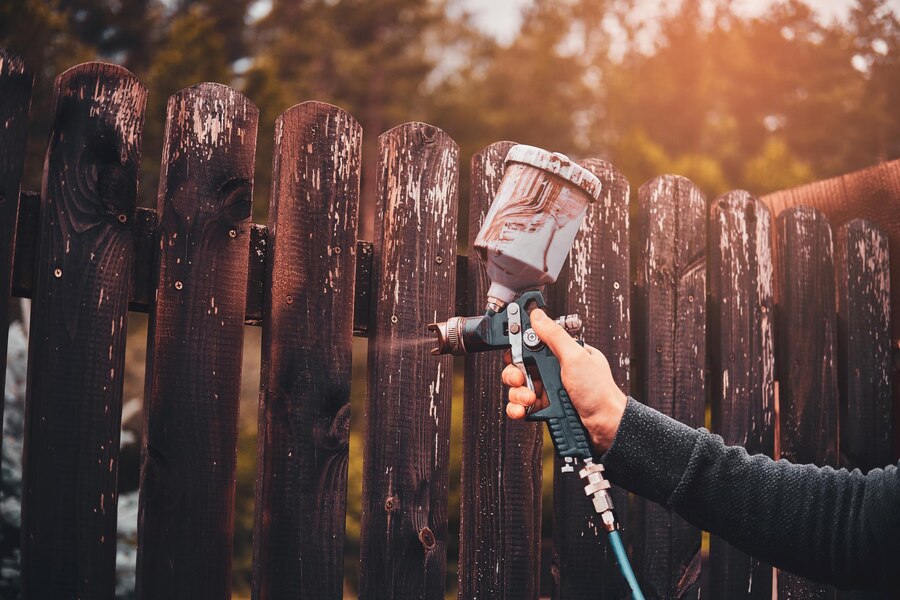
If you have more than 30 metres of fence to coat, the application method becomes important. Cuprinol Spray and Brush Paint and Ronseal Fence Life Plus both work with pump sprayers, which can cut application time by 75 per cent. Just check the label, as not every product is sprayer-friendly.
The 7 Best Fence Paints for UK Properties
1. Ronseal Fence Life Plus: Best All-Rounder
Ronseal Fence Life Plus is the default recommendation for most UK garden fences, and for good reason. It delivers up to five years of weatherproof protection, resists mould and algae growth, and is rain-resistant within one hour of application. Coverage sits around 5 square metres per litre on smooth timber.
The range includes 14 colours, from traditional Tudor Black Oak to softer Country Oak and Willow tones. It works well by brush, roller, or pump sprayer, making it suitable for everything from a single panel touch-up to a full perimeter repaint.
Best for: Standard featheredge, closeboard, and panel fences across most UK gardens. Watch out for: It is thick, so stir thoroughly. Avoid applying in direct hot sunlight or if rain is forecast within an hour.
2. Cuprinol Ducksback: Best for Sheds and Rough Sawn Timber
Cuprinol Ducksback has been the go-to product for British sheds and rough-sawn fence panels for decades. The water-based formula is showerproof within an hour and offers up to five years of colour protection. With coverage of approximately 6 square metres per litre, it is also one of the more economical options.
Its consistency works particularly well on absorbent, untreated, or weathered timber. The colour palette leans traditional, with Forest Oak, Autumn Brown, Silver Copse, and the popular Harvest Brown all giving fences a natural, settled look.
Best for: Garden sheds, summerhouses, rough-sawn timber, and older fences that need rejuvenating. Watch out for: Coverage drops noticeably on very dry, thirsty timber. A primer coat of diluted product can help.
3. Cuprinol Garden Shades: Best for Decorative Colour
If you want your fence to be a feature rather than a backdrop, Cuprinol Garden Shades is the strongest decorative option on the UK market. It is designed for fences, sheds, trellis, raised beds, and even garden furniture, offering up to six years of colour. The palette is unmatched, with around 30 shades including the cult favourites Wild Thyme, Pale Jasmine, Beach Blue, and Sweet Pea.
Coverage is roughly 6 square metres per litre, and the matt finish suits modern garden design beautifully. Many UK homeowners use Garden Shades to create accent walls or coordinate fences with planting schemes.
Best for: Decorative gardens, accent panels, and anyone treating the fence as a design element. Watch out for: It is a colour-led product, not a heavy-duty preservative. Pair with a separate wood preserver on bare timber.
4. Ronseal One Coat Fence Life: Best for Quick Refresh Jobs
Sometimes you just need a fast refresh before the in-laws visit. Ronseal One Coat Fence Life delivers solid colour in a single application, with coverage of around 5 square metres per litre. The trade-off is durability: expect roughly two years of protection compared with the five years from Fence Life Plus.
It is ideal as a budget option or for fences you plan to replace within the next few seasons.
Best for: Quick visual updates, rental properties, and short-term fence maintenance. Watch out for: Genuine “one coat” performance only works on smooth, previously painted fences. Rough timber usually still needs two coats.
5. Barrettine Shed and Fence Treatment: Best Trade-Grade Option
Barrettine is a respected UK trade brand, and their Shed and Fence Treatment is the choice of many professional landscapers, including the Buon Construction team, for certain projects. It is a low-VOC, solvent-based treatment that penetrates timber deeply, offering a semi-transparent finish that protects against rot, insects, and UV.
Coverage is exceptional at roughly 10 square metres per litre, and the lifespan exceeds five years on properly prepared timber.
Best for: Premium projects, rustic gardens, and homeowners who want trade-grade protection. Watch out for: It needs bare or properly prepared timber to penetrate. It will not adhere well over existing opaque paint.
6. Bedec Barn Paint: Best for Long-Term Durability
Bedec Barn Paint is technically marketed for barns, cladding, and outbuildings, but it is increasingly popular for high-end fence projects. The water-based formula offers up to 10 years of protection (the longest in this list), with a slight satin sheen that resists dirt and weathering better than matt finishes.
At about 12 square metres per litre, it also goes further than most fence paints, partially offsetting the higher per-litre cost.
Best for: Premium fences, cladding, garden offices, and anyone who hates repainting. Watch out for: Higher upfront cost. Best applied by brush or roller; spray application can be tricky.
7. Sadolin Classic Woodstain: Best Premium Semi-Transparent
Sadolin is the heritage brand for serious wood protection in the UK and Northern Europe. Sadolin Classic Woodstain offers deep penetration, a beautiful semi-transparent finish that enhances grain, and around six years of protection. Coverage averages 8 square metres per litre.
It is overkill for a plain larchlap panel, but on quality hardwood fencing, gates, or pergolas, the results are stunning.
Best for: Hardwood gates, oak fence posts, pergolas, and feature timber where the grain matters. Watch out for: Higher price point. Requires careful preparation for best results.
Types of Fence Paint Explained
Wood Preservatives
These are not strictly paints, but preservatives like Cuprinol 5 Star Wood Treatment are designed to penetrate bare timber and protect against rot, fungal decay, and insect attack. Apply before a topcoat for the longest-lasting result, especially on new untreated fence posts.
Solid Colour Fence Paint
The standard category and what most homeowners actually need. Ronseal Fence Life Plus and Cuprinol Ducksback are the dominant products. These hide the timber grain, deliver an even colour, and are easy to maintain.
Semi-Transparent Wood Stains
Products like Barrettine and Sadolin keep the grain visible while adding colour and weather protection. The finish is more refined, but maintenance is more demanding because UV damage is more visible.
Decorative Fence Paint
Cuprinol Garden Shades leads this category. Designed for visual impact rather than maximum protection, these are typically paired with a separate preservative on bare wood.
Specialist Multi-Surface Paints
Bedec Barn Paint and similar products coat wood, metal, brick, and even some plastics. They are useful when the fence ties into mixed materials, such as a fence with metal gateposts.
How to Get the Best Results from Fence Paint
Even the best fence paint will fail on a poorly prepared surface. The team at Buon Construction follows this approach on every fence project, whether it is a small back-garden refresh or a full property perimeter:
- Choose a dry weather window. Aim for at least 24 hours of dry weather, ideally 48. UK forecasts being what they are, an autumn morning or a settled spring week often works best.
- Clean the fence thoroughly. Use a stiff brush to remove moss, algae, dirt, and loose flakes. A pressure washer on a wide fan setting can speed this up, but the timber must dry fully (at least 48 hours) before painting.
- Treat bare timber. Apply a wood preserver to any exposed sections, particularly near the ground where rot tends to start.
- Mask what you want to keep clean. Cover the lawn, paving, and any plants close to the fence with dust sheets or cheap polythene.
- Stir, do not shake. Always stir paint thoroughly before and during application. Shaking introduces air bubbles that show in the finish.
- Work top down. Paint the top rail and capping first, then work down each panel. This catches drips before they ruin a finished section.
- Apply two coats to rough timber. Even “one coat” products usually benefit from a second pass on featheredge or thirsty old wood.
Common Mistakes to Avoid
The most common reason fence paint fails early is application onto damp timber. The second is skipping the preparation step. The third is buying decorative paint when a weatherproof preservative was actually needed. If your fence is structurally damaged, no amount of paint will save it. In those cases, replacement panels or a full fence installation are the more cost-effective path
Looking for a Professional Finish?
Choosing the best fence paint is only half the job. A well-painted fence starts with sound, properly installed timber. At Buon Construction, we install, repair, and maintain garden fences across the UK, from individual panel replacements to full property perimeters. If your fence is past its best, or you would rather hand the project to a professional team, our fencing specialists are happy to provide a free, no-obligation quote.
Get in touch with Buon Construction today for expert advice on fence installation, repair, and exterior property maintenance.
Frequently Asked Questions
How long does fence paint last in the UK?
Most quality opaque fence paints last between 3 and 6 years in UK conditions, depending on the product, surface preparation, and exposure. North-facing fences in shaded gardens tend to outlast south-facing fences that take full UV.
How much fence paint do I need?
As a rough rule, a 5-litre tin covers roughly 25 to 30 square metres of smooth panel or 15 to 20 square metres of rough sawn timber. Measure the fence height by length and multiply by two if you are painting both sides.
What is the best colour for a garden fence?
Darker shades (Tudor Black Oak, Forest Oak, Charcoal) recede visually and make small gardens feel bigger by blurring the boundary. Lighter shades (Country Oak, Willow, Pale Jasmine) brighten shaded gardens but show wear and dirt faster.
Can I paint a wet fence?
No. The timber needs to be dry to the touch and ideally dry through. Painting damp wood traps moisture, which causes peeling, blistering, and premature failure.
Should I paint a new fence straight away?
If the fence is pressure-treated (most modern UK fence panels are), wait 4 to 8 weeks for the treatment to dry out and the timber to weather slightly. Painting immediately can cause adhesion issues.
Is Cuprinol or Ronseal better?
Both brands offer excellent products. Ronseal Fence Life Plus typically wins on outright durability on smooth timber, while Cuprinol Ducksback often performs better on rough-sawn and absorbent surfaces. For decorative colour, Cuprinol Garden Shades is the stronger range.
Can I spray fence paint?
Yes, as long as the product is labelled sprayer-compatible. Both Ronseal Fence Life Plus and Cuprinol Spray and Brush Paint work well with pump sprayers and electric spray systems. Spraying is faster but uses more paint, so factor that into your purchase.

2 Responses
Your writing has a way of making even the most complex topics accessible and engaging. I’m constantly impressed by your ability to distill complicated concepts into easy-to-understand language.