
Building a bungalow in the UK costs between £1,800 and £3,000 per square metre in 2026, which puts a typical 2-bedroom build at £150,000 to £230,000 before you’ve bought the plot. And here’s the part that surprises almost everyone at the first meeting: a bungalow costs more per square metre than a two-storey house of the same size, not less.
That single fact shapes almost every budgeting decision that follows, so it deserves more than a passing mention. Below, we break down realistic 2026 bungalow build costs by bedroom count, compare traditional brick, timber-frame and prefab construction, and explain what the plot, services and professional fees add to the final budget.
The figures combine typical UK construction rates with the new-build and renovation projects Buon Construction prices across Nottingham and the wider East Midlands, rather than relying solely on figures repeated across other cost guides.
For a wider comparison covering new builds, extensions and renovation work, see our guide to building costs per square metre in the UK
Table of Contents
How Much Does It Cost to Build a Bungalow? (Quick Answer)
Here’s what bungalow builds are costing in 2026, construction only. Plot, professional fees and VAT are covered further down:
| Bungalow size | Typical floor area | Build cost (2026) | Time on site |
| 2-bedroom bungalow | 70 – 90m² | £150,000 – £230,000 | 5 – 8 months |
| 3-bedroom bungalow | 90 – 120m² | £180,000 – £300,000 | 6 – 9 months |
| 4-bedroom bungalow | 130 – 160m² | £240,000 – £450,000 | 8 – 12 months |
| Chalet bungalow (3 bed) | 100 – 130m² | £180,000 – £320,000 | 7 – 10 months |
Those ranges assume a mid-range specification decent kitchen and bathrooms, good insulation, nothing bespoke. A basic spec can shave 15–20% off. An architect-designed build with premium finishes adds at least that much on top.
One thing worth saying early. The build cost is usually only 60–70% of the full project once you add the plot, drawings, planning, services and contingency. If a headline figure looks too good, it’s almost always the build-only number wearing a disguise.
Why Bungalows Cost More Per Square Metre Than Houses
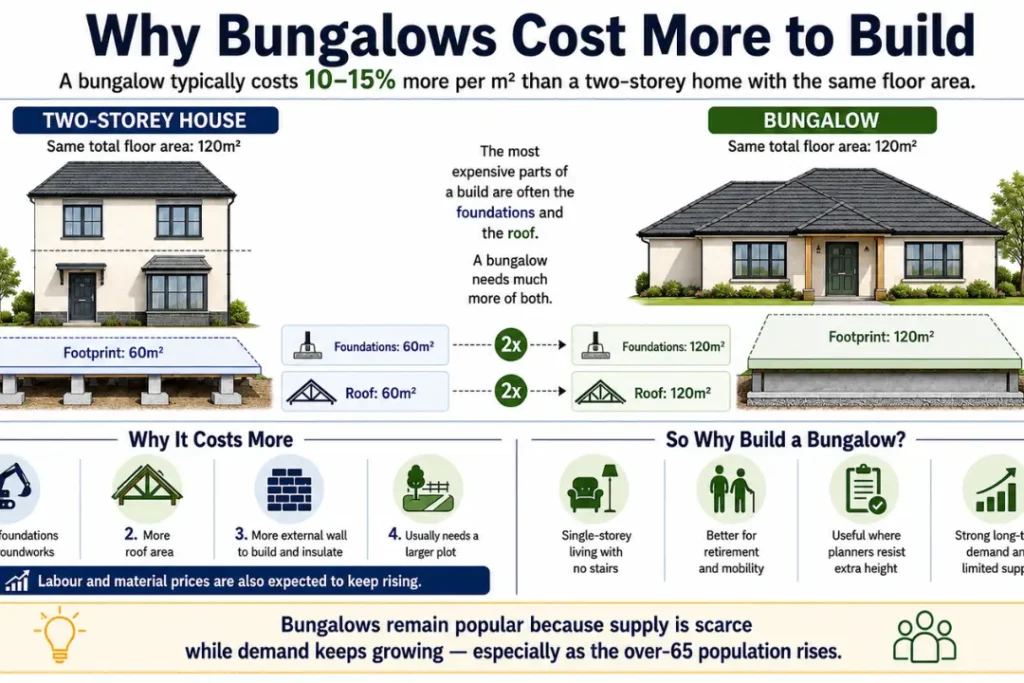
A bungalow costs roughly 10–15% more per square metre than a two-storey house with the same floor area. The reason is simple once you see it: the two dearest parts of any build are the foundations and the roof, and a bungalow needs twice as much of both.
Picture a 120m² home. As a two-storey house, it sits on a 60m² footprint 60m² of foundations, 60m² of roof. Build the same 120m² as a bungalow and you need 120m² of foundations and 120m² of roof. You’ve doubled the groundworks and doubled the roofing, and neither comes cheap. There’s more external wall to build and insulate too, and a bigger footprint usually means a bigger, dearer plot.
Labour and material prices are also expected to continue rising, as covered in our latest UK construction-cost forecast
So why does anyone build one? Because per-square-metre maths isn’t the whole story. Single-storey living removes stairs entirely, which matters enormously if you’re building for retirement, for mobility, or simply for the next thirty years rather than the next five. Bungalows also suit plots where planners resist height replacing an old bungalow in an established street, say, or building in a garden where a two-storey home would overlook the neighbours. And they hold value stubbornly well, because demand comfortably outstrips how few of them get built. The NHBC has reported bungalow construction at its lowest level in decades, while the number of people over 65 keeps climbing. Scarce supply, growing demand you can finish that sentence yourself.
Bungalow Build Costs by Size
Bedroom count is how most people frame the question, so that’s how we’ll break it down.
Cost to build a 2 bedroom bungalow
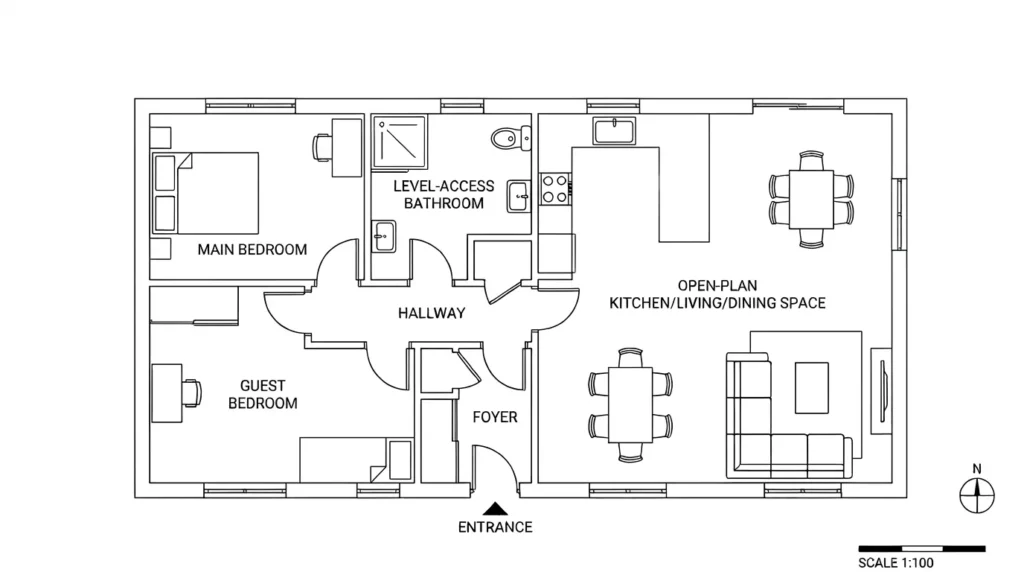
A 2-bedroom bungalow costs £150,000 to £230,000 to build in 2026, based on a floor area of 70–90m² at £1,800–£2,600 per square metre across most of the UK.
The 2-bed is the classic bungalow for a reason. It’s the size we’re asked to price most often, usually by downsizers who want a comfortable main bedroom, a guest room, one generous open-plan living space and a level-access bathroom. At this scale, a simple rectangular footprint under a standard pitched roof is dramatically cheaper than anything L-shaped or split-level every corner you add costs money three times over, in foundations, walls and roof.
If the budget is tight, this is also the size where a package builder or timber frame kit makes the strongest case (more on both shortly), because compact, standardised designs are exactly what those systems do best.
Cost to build a 3 bedroom bungalow
A 3-bedroom bungalow costs £180,000 to £300,000 to build, across a typical 90–120m² floor area.
The jump from two bedrooms to three is bigger than it looks on paper. It’s rarely just one extra room a third bedroom tends to drag a second bathroom, a longer hallway and more circulation space along with it, and on a single storey all of that lands on the footprint. More foundations, more roof, often a wider plot. Budget for the space you’ll actually use rather than the bedroom count that sounds right; an under-used third bedroom is one of the most expensive spare rooms you can build.
Cost to build a 4 bedroom bungalow
A 4-bedroom bungalow costs £240,000 to £450,000 to build, over roughly 130–160m².
At this size you’re building a substantial house that happens to be on one level, and the footprint starts working against you. A 150m² single-storey home needs a serious plot comfortably 400m²+ once you allow for garden and access and in much of the UK the land will cost as much as the build. Roof spans this wide also start needing engineered trusses or steel, which nudges structural costs up again. Four-bed bungalows are glorious to live in. Nobody builds one to save money.
Chalet bungalow costs
A chalet bungalow bedrooms tucked into the roof space, with dormer windows costs £180,000 to £320,000 for a 3-bed layout, and it’s the closest thing bungalow building has to a cheat code.
Because the first-floor rooms live inside the roof you were paying for anyway, a chalet buys extra floor area without extra foundations. Per square metre of usable space it usually works out 10–20% cheaper than a pure bungalow. The trade-offs: sloped ceilings, fiddlier insulation detailing in the roof, and stairs which defeats the point if step-free living is why you’re here. But for families who like the bungalow look without the bungalow premium, it’s often the smart middle path.
Before committing to a chalet layout, compare the different types of loft conversions and check whether the proposed rooms will satisfy practical minimum ceiling-height requirements.
Construction Methods Compared: Brick, Timber Frame and Prefab
How you build shifts both the cost and the calendar. Three routes cover almost every bungalow built in the UK today.
Traditional brick and block
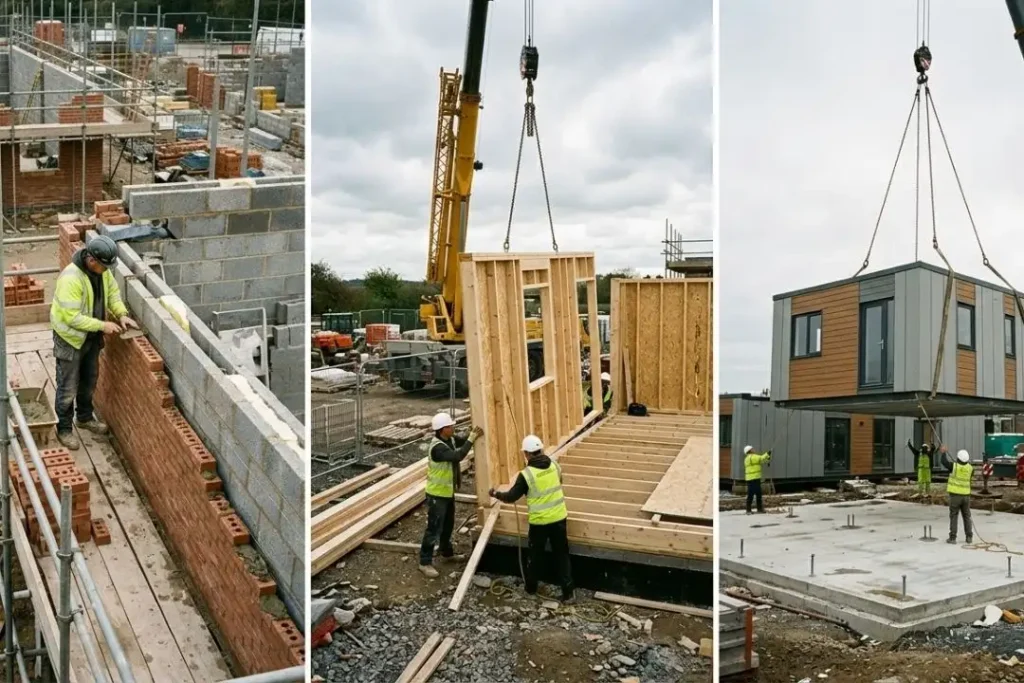
Brick and block is the default: cavity masonry walls, built on site, at around £1,800–£2,600 per square metre. It’s the slowest route walls rise course by course, and wet trades wait on weather but it’s what most local builders know inside out, it’s easy to mortgage and insure, and buyers trust it. For a one-off bungalow on a normal plot, it’s still the benchmark everything else gets measured against.
Timber frame
Timber frame lands at a similar cost to masonry sometimes marginally more for the frame itself but wins on speed. The frame is manufactured off site and erected in days, getting you weathertight weeks earlier, which shortens the schedule and cuts your exposure to winter delays. It hits high insulation standards easily too. On total project cost the two routes usually finish within a few percent of each other; the real difference is time and predictability.
Prefab, modular and package-build bungalows
A package-build or prefab bungalow typically costs £1,600–£2,400 per square metre for the building itself, manufactured in a factory and assembled on your prepared foundations in days rather than months.
This corner of the market has grown up a lot. Modern modular homes are a long way from the post-war prefab image factory precision generally means better airtightness and insulation than the average site build. Package builders, who supply design, kit and sometimes erection as one contract, suit people who want one fixed price and one point of responsibility. Two cautions from experience, though. The glossy kit price never includes the groundworks, foundations, service connections or finishes those are yours, and they’re substantial. And check the system is accepted by mainstream lenders and warranty providers before you fall in love with it. A cheap building you can’t mortgage isn’t cheap.
Bungalow Build Costs by UK Region
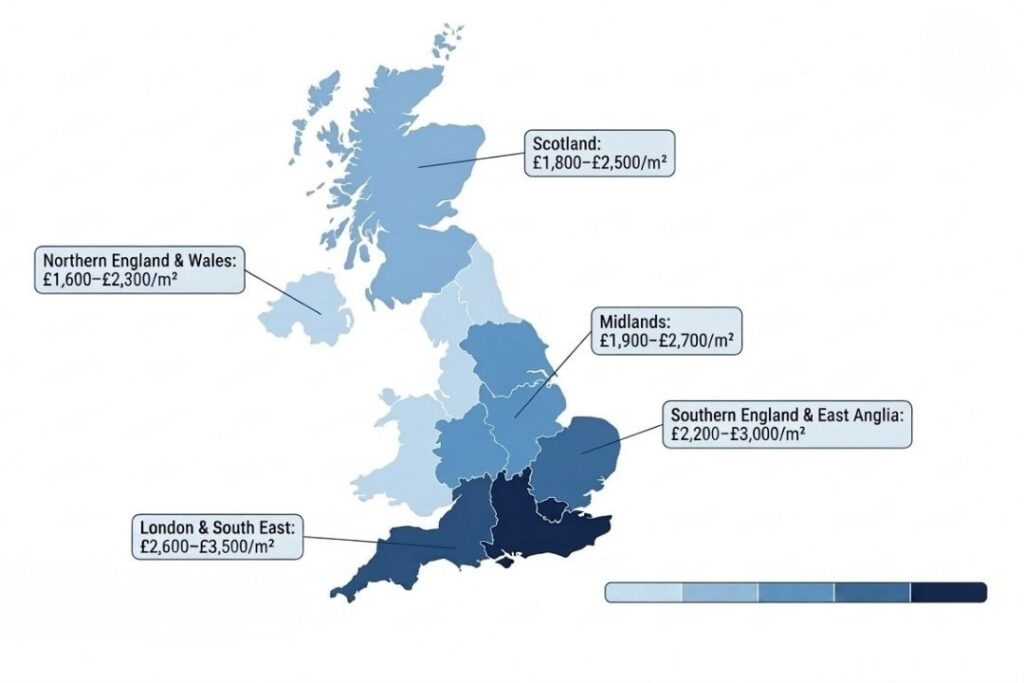
The same bungalow can cost £60,000 more in Surrey than in South Yorkshire, and nearly all of that gap is labour and land. Using the same regional framework as our building cost per square metre guide, with the single-storey premium applied:
| Region | Bungalow build cost per m² (2026) |
| London & South East | £2,600 – £3,500 |
| Southern England & East Anglia | £2,200 – £3,000 |
| Midlands | £1,900 – £2,700 |
| Northern England & Wales | £1,600 – £2,300 |
| Scotland | £1,800 – £2,500 |
Labour takes up 40–50% of a new-build budget, so regional day rates compound across every trade and every week on site. Plots amplify the gap: a bungalow needs proportionally more land per square metre of home, so expensive-land regions punish single-storey twice.
The Costs Nobody Puts in the Headline Figure
Build cost gets the attention. These four items decide whether the project actually stacks up.
Buying the plot
Plot prices swing too wildly by postcode for a national figure to mean much anywhere from £60,000 for a modest plot in parts of the North to £300,000+ in the South East. The bungalow-specific point is this: your home spreads sideways rather than upwards, so you need a wider plot than a house of equal floor area, and you’re often bidding against developers who’d rather put two storeys (or two houses) on it. Garden plots and replacement-dwelling sites buying a tired old bungalow and rebuilding are frequently the most realistic ways in.
Connecting water, electricity and drainage
Getting services onto a bare plot typically costs £5,000 to £15,000 all in, and it’s the line first-time self-builders most often forget entirely.
As rough working figures: a new electricity connection usually runs £1,500–£3,000 if the network is nearby, a water connection £1,000–£3,000, and foul drainage anywhere from £1,500 for a straightforward sewer connection to £8,000+ if there’s no mains sewer and you need a treatment plant. Distance is everything a plot 200 metres from the nearest main is a very different animal to one on a serviced street. Get budget quotes from the utility companies before you buy the land. Not after.
Planning permission, drawings and professional fees
A new bungalow always needs full planning permission permitted development doesn’t cover new dwellings. The application fee in England is around £600, but the real cost sits around it: architectural drawings at £3,000–£8,000, plus structural engineering, surveys and Building Regulations drawings. Allow 8–13 weeks for a decision on a straightforward application, longer on a sensitive site. All told, sensible budgets set aside 10–15% of the build cost for professional fees, warranties and statutory costs.
VAT and why self-builders get it back
Here’s the good news buried in the paperwork: new-build homes are zero-rated for VAT. A VAT-registered builder shouldn’t charge you VAT on constructing a new dwelling, and materials you buy yourself can be reclaimed at 20% through the DIY Housebuilders Scheme (VAT Notice 431NB) after completion. On a £200,000 build that reclaim can be worth £15,000–£25,000. Keep every receipt from day one and submit within six months of completion HMRC gives you one claim, so it needs to be complete.
Example Budget: A 90m² 2-Bed Bungalow
Ranges are useful. A worked budget is better. Here’s how a mid-spec 90m² 2-bedroom bungalow breaks down across most of the UK in 2026, excluding the plot:
| Item | Cost range |
| Groundworks, foundations & drainage | £20,000 – £30,000 |
| Superstructure: walls, roof structure & coverings | £50,000 – £65,000 |
| Windows & external doors | £10,000 – £15,000 |
| First fix: plumbing, electrics, carpentry | £15,000 – £20,000 |
| Plastering & second fix | £15,000 – £20,000 |
| Kitchen & bathroom | £12,000 – £20,000 |
| Heating system (air source heat pump or boiler) | £8,000 – £14,000 |
| Externals: driveway, paths, basic landscaping | £10,000 – £15,000 |
| Professional fees, warranty & Building Control | £12,000 – £18,000 |
| Contingency (10%) | £15,000 – £20,000 |
| Total | £167,000 – £237,000 |
That works out at £1,850–£2,650 per square metre exactly where a well-run 2-bed build should land. And look at the contingency line before you’re tempted to delete it. It isn’t padding. It’s the ground conditions you couldn’t see, the price rise mid-build, the thing Building Control asks for that nobody mentioned. Projects without one don’t cost less; they just run out of money with the decorating unfinished.
How to Keep Bungalow Build Costs Down
Not everything on a build is negotiable. These things genuinely move the number:
Keep the footprint simple. A rectangle under a straightforward pitched roof is the cheapest shape in construction. Every dog-leg, bay and roof valley adds cost at foundation, wall and roof level simultaneously.
Consider a chalet layout. Rooms in the roof buy floor area without buying foundations the single biggest per-m² saving available on this type of build.
Get the design right before anyone digs. Changes on paper cost a drawing revision. Changes on site cost demolition, delay and remobilised trades.
Look hard at package and timber frame routes. Fixed prices and factory speed suit compact bungalows well just price the full project, not the kit.
Defer the externals. The house has to be finished; the fancy driveway and full landscaping can wait a year and be paid from cashflow rather than borrowing.
Protect the contingency. Ten to fifteen percent, ring-fenced, not spent on a nicer kitchen in month two. The builds that end badly are almost never the ones that budgeted honestly.
Getting a Real Price for Your Bungalow
If you take one number from this guide, take £1,800–£3,000 per square metre for the build in 2026 then remember the plot, services, fees and contingency turn that into the true project cost. And if you take one idea, take this: a bungalow isn’t the budget option, it’s the long-game option, and it rewards simple design and honest budgeting more than almost any other build.
And if you take one broader lesson, let it be this: a bungalow is not necessarily the budget option. It is a long-term housing choice that rewards a simple design, careful planning and an honest budget more than almost any other type of build.
For anyone planning a bungalow in Nottingham or the wider East Midlands, whether on a garden plot, as a replacement dwelling or as a complete self-build, Buon Construction can price the project line by line, from the initial groundworks through to final sign-off.
Last updated: July 2026. Figures reflect typical UK rates and the projects we price; every plot tells its own story, so treat these as planning numbers rather than quotes.
FAQs
How much does it cost to build a 2 bed bungalow in the UK?
Around £150,000–£230,000 for the build in 2026, based on 70–90m² at £1,800–£2,600 per square metre. Add the plot, services and professional fees for the full project figure typically another 40–60% on top of construction, depending on land prices in your area.
Is it cheaper to build a bungalow or a house?
A house. A two-storey home of the same floor area costs roughly 10–15% less per square metre, because it needs half the foundations and half the roof. People build bungalows for step-free living, plot constraints and long-term resale strength not to save on construction.
Do you pay VAT when building a bungalow?
Not on a new build. Construction of a new dwelling is zero-rated, so a VAT-registered builder shouldn’t charge VAT on the build, and you can reclaim the 20% VAT on materials you buy yourself through the DIY Housebuilders Scheme after completion. Renovations usually carry full VAT a major factor when weighing rebuild against refurbishment.
How much does a prefab or package-build bungalow cost?
Expect £1,600–£2,400 per square metre for the manufactured building, so roughly £130,000–£200,000 for a 2-bed structure. Groundworks, foundations, service connections and often internal finishes sit outside the kit price, so compare full project costs rather than brochure figures.
How much does it cost to get water and electricity connected to a plot?
Typically £5,000–£15,000 for all services on a plot near existing networks: roughly £1,500–£3,000 for electricity, £1,000–£3,000 for water, and £1,500–£8,000+ for drainage depending on whether you can reach a mains sewer or need a treatment plant. Distance from the mains decides it, so get utility quotes before buying land.
Is it cheaper to build a bungalow or buy one?
Buying is usually cheaper and always faster. Building wins when existing bungalows in your area are scarce or overpriced, when you need a layout the market doesn’t offer, or when you already own suitable land and the VAT-free status of new builds narrows the gap more than most people expect.
