
Planning an office renovation usually starts with good intentions. You want a better-looking space, happier employees, and a workplace that actually supports how your business runs. But once planning begins, it often feels more complicated than expected. Costs add up, timelines change, and work still has to continue while everything is being upgraded.
An office renovation isn’t just about making the space look modern. It’s about fixing what doesn’t work, improving comfort, and creating an environment where people can actually do their jobs properly. When the planning is done right, renovation becomes an improvement instead of a disruption.
This guide walks through the process in a practical, realistic way no overcomplicated ideas, just clear steps to help you plan and manage an office renovation properly.
Table of Contents
Take a Real Look at Your Current Office
Before changing anything, you need to understand how your office is actually being used. Not how it was designed to be used but how people really work in it every day.
Walk around during working hours. Notice where people sit, where noise builds up, and which areas feel crowded or underused. Pay attention to lighting, temperature, storage, and how easy it is to move around the space.
Talk to your staff. You’ll often hear the same issues repeated lack of meeting rooms, uncomfortable desks, poor lighting, or nowhere to take short breaks. These everyday problems should guide your renovation decisions far more than design trends.
Be Clear About What You’re Trying to Fix
Many office renovations fail because there’s no clear goal. The project becomes about “updating the office” rather than solving specific problems.
Ask yourself what you actually want to improve. Is productivity suffering? Has the business grown and outgrown the space? Do clients visit regularly and form impressions based on your office? Or has hybrid working changed how the space is used?
You don’t need to fix everything at once. Trying to do too much usually leads to compromises. Clear priorities help you make better decisions when budgets or timelines become tight.
Set a Budget That Makes Sense
Budgeting is where most renovation stress comes from. Underestimating costs early on almost always leads to frustration later.
List every expected expense design work, construction, materials, furniture, IT upgrades, and professional fees. Don’t rely on rough guesses. Even small items add up quickly.
Going cheap can be tempting, but it often costs more in the long run. Poor-quality furniture, lighting, or finishes wear out faster and create ongoing problems. Spending a bit more upfront usually leads to fewer issues later.
Always leave room for the unexpected. Renovations rarely go exactly as planned, especially in older buildings. A contingency budget of around 10–20% gives you breathing room when surprises appear.
Design for Real Work, Not Just Appearance
A good-looking office means nothing if it’s uncomfortable or impractical. Design should support how people work not just how the space looks.
Open-plan offices are popular, but they’re not ideal for every team. Some employees need quiet, others need collaboration. A mix of open areas, meeting rooms, and quieter spaces usually works best.
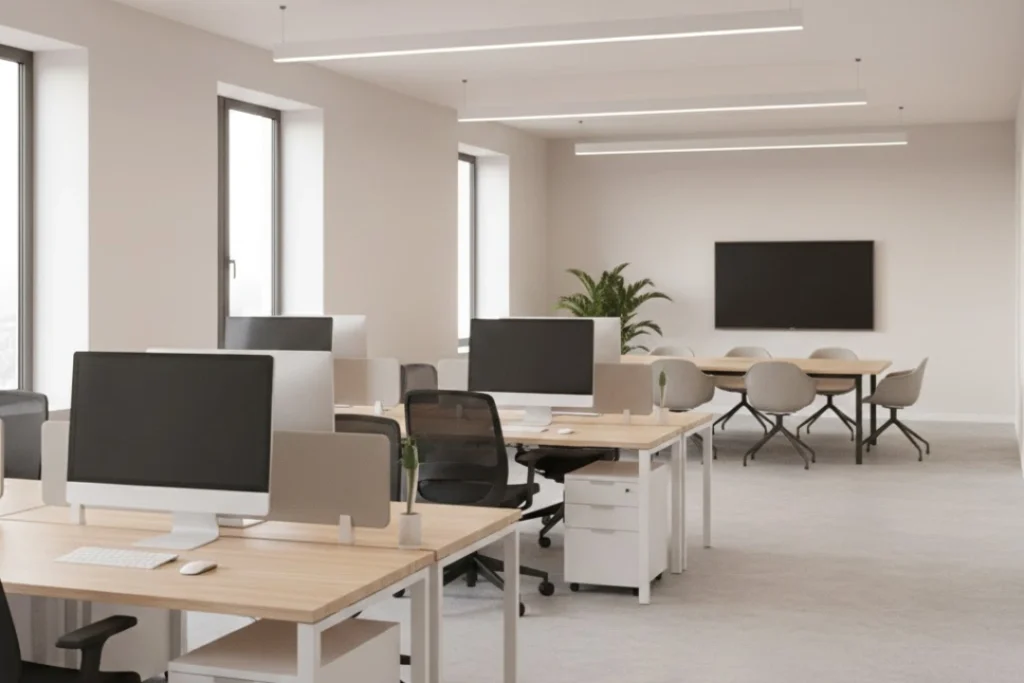
Furniture matters more than many people realise. Uncomfortable chairs, poor desk heights, and bad lighting affect productivity and wellbeing every single day. These practical details should always come before decorative choices.
Your office should also feel like it belongs to your business. Subtle branding, consistent colours, and thoughtful finishes create a professional environment without feeling forced or artificial.
Choose Professionals Carefully
The people you hire will largely determine how smooth or stressful the renovation becomes.
Take time when choosing contractors. Look at reviews, ask for recommendations, and check previous projects. Reliable contractors communicate clearly and don’t avoid difficult questions.
Designers and architects can be extremely helpful, especially for larger projects. They help avoid layout mistakes, ensure compliance with regulations, and make better use of space. While they add upfront cost, they often prevent expensive problems later.
Always check references. Speaking directly to previous clients gives you a much clearer picture than any website or portfolio.
Plan the Timeline with Flexibility
Office renovations take time, and delays are common. A realistic timeline helps keep expectations under control.
Break the project into stages planning, ordering materials, construction, and final setup. Each stage should have some flexibility built in. Material delays, weather issues, or unexpected building problems can all affect schedules.
If your office remains operational during renovation, plan carefully. Some businesses renovate in phases, while others allow remote working for short periods. Keeping staff informed helps reduce frustration and confusion.
Stay Involved Throughout the Process
Even with good contractors, staying involved is important. Regular check-ins help catch issues early and keep everything aligned with your expectations.
Communication should be clear and consistent. Any changes whether design-related or budget-related should be discussed properly before moving forward.
Problems will come up. That’s normal. Staying flexible and focused on your original goals makes it easier to deal with challenges without unnecessary stress.
Final Thoughts
A successful office renovation doesn’t need to be perfect. It just needs to be better than what you started with. When planned realistically, an office renovation can improve how people work, how your business is seen, and how comfortable the workplace feels every day.
With clear goals, sensible budgeting, and the right people involved, office renovation becomes less of a headache and more of a long-term improvement for your business.
FAQs:
How long does an office renovation usually take?
The timeline depends on the size of the office and the type of work involved. Small refurbishments may take a few weeks, while larger renovations can last several months. Delays are common, so it’s always better to allow extra time in the schedule rather than rushing the work.
Can we keep working while the office is being renovated?
In many cases, yes. Some businesses renovate in phases, while others allow staff to work remotely for part of the project. The key is planning ahead and communicating clearly with employees so everyone knows what to expect.
How much should we budget for an office renovation?
There’s no fixed number, as costs vary based on design, materials, and location. A good approach is to set a realistic budget and include an extra 10–20% for unexpected expenses. This helps avoid stress if something unplanned comes up.
Do we need an interior designer for an office renovation?
It’s not mandatory, but it can be very helpful especially for medium to large projects. Designers help with space planning, layout decisions, and compliance issues, which often saves time and money in the long run.
What’s the biggest mistake businesses make during office renovations?
The most common mistake is poor planning. Rushing into a renovation without clear goals, a realistic budget, or proper timelines usually leads to delays and extra costs. Taking time to plan properly makes the entire process smoother.
